Friday, March 11, 2011

Folie Ideas

My first thought is trying to capture the history of the site.  It holds strong Brisbane history, and therefore it is important that the folie suits the history, but not overrides it. 
The folie cannot take away from the grand story bridge, which makes me feel the folie will have to establish a connection with what is already on the site.  
I want to capture the abandoned feel of the site but with a contemporary feel.  This is what I have come up with so far. 
Concrete base with timber walls.

Positioning on site. 

Investigations of Folie designs

Fiona Curren, This time next year things will be different.

Front

Side
Representing time through a tree house.  This is not meant to be used, as there is no way on getting into the tree house. This elevates the importance of the structure, as being nearly impossible to touch, while being so close. Note the interesting use of timber, can be structurally strong, and used in an intricate fashion, however at the same time, can be messy, and not help in shelter.
http://contextualgardens.blogspot.com/2010_08_01_archive.html


Overtreders W, The Roof That Goes Up in Smoke
The Roof That Goes Up in Smoke by Overtreders W
An inflatable pillow on stilts. Provides shelter, however has the illusion of being able to float away. Interesting use of structural timber as seating. 
http://www.dezeen.com/2010/12/27/the-roof-that-goes-up-in-smoke-by-overtreders-w/#more-108963


Zeinstra van Gelderen, Rubber House
Rubber House by Zeinstra van Gelderen architecten
Unoccupied folie
Rubber House by Zeinstra van Gelderen architecten
Person Getting In
Rubber House by Zeinstra van Gelderen architecten
Person inside
This holds one person and is made completely of rubber. It holds a bench and window. This concept is not at all appropriate with the site, as the site needs something open, and most of the materials used are very natural and structural.
http://www.dezeen.com/2010/08/23/rubber-house-by-zeinstra-van-gelderen-architecten/#more-92561

Site Analysis

After my first visit to the site, I have done basic analysis on the site.

There is quite a lot already on the site. This is without looking at the workers and the construction work happening on the site at the moment.  I think I will design for the site, without looking at what the construction workers are doing, I am going to make the decision that they are cleaning up after the January floods in the Brisbane River. 


There is a lot of movement through the site, however most has been cut off due to construction workers on the site.  

There is constant light on the site, but due to the cliffs and the story bridge, shadows can be cast on it.  

Saturday, March 5, 2011

WEEK 1

First part of modelling up site in Revit. Basic massing of buildings according to Google Maps, topography from site boundary map (seen in earlier post).

Story Bridge and Brisbane River.  Howard Smith Wharves to the left

Massing of Howard Smith Wharves 10am
Massing of Howard Smith Wharves 4pm


HOWARD SMITH WHARVES

Howard Smith Wharves was developed by the Queensland Government in conjunction with the Story Bridge between 1934 and the early 1940s.  It was developed to create work for the people of Brisbane to help with the depression in the 1930s.  The site, properly known as the Brisbane Central Wharves, replaced smaller wharves constructed in early 20th Century by Brisbane Wharves Ltd, leased by William Howard Smith & Sons Ltd. (Department of Environment and Resource Management, 2006)
The offices for Howard Smith Co. Ltd was completed by 1936 as a two-storey reinforced concrete building. In 1939, 3 berths with 5 new storage sheds, constructed of hardwood timber, and corrogated iron.  The wharves of reinforced concrete base laid on the rock of the river.  Hardwood timber such as ironbark, blue gum, yellow stringybark, spotted gum and messmate were used for walings, decking and berths.
In 1941-42 due to the Second World War, Brisbane City Council constructed 5 air raid shelters near the site adjacent to the Story Bridge. 
Howard Smith left the site, to closer to the mouth of the River in the 1960s.  The Water Police then occupied the site as well as the Queensland Works department.  The decking however, was largely destroyed and washed away during the 1974 floods.


Source: Department of Environment and Resource Management, 2006, Howard Smith Wharves, The State of Queensland. 
http://www.epa.qld.gov.au/chims/placeDetail.html?siteId=16518
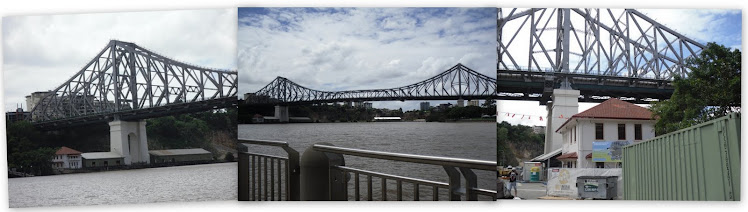
THE SITE

Howard Smith Wharves Site Boundary
Aerial view of site in Brisbane City context.